

Regent Builds Tierlist: Strongest, Average & Other
 36
36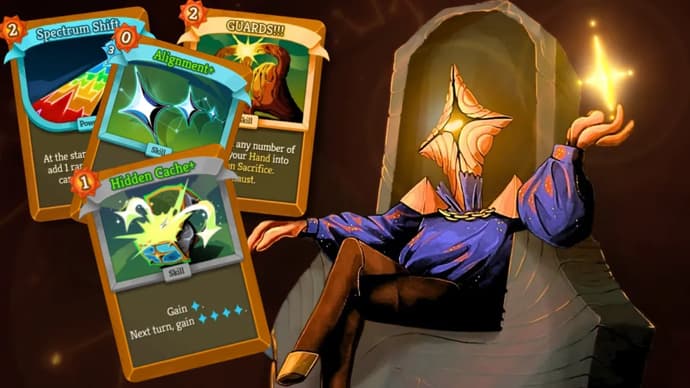
Regent runs five archetypes in Slay the Spire 2: Star Build, Infinite Alignment, Sovereign Blade, Card Creation, and Debris. Its starting relic, Crown of Stars, grants 3 Stars at the start of every combat, establishing the secondary resource economy before any card resolves. Key cards anchor each archetype, but none lock into a fixed sequence — balancing Star generators against Star spenders, thinning Strikes, and sequencing payoff spells correctly determines how far any build goes. This tierlist ranks all five from Tier-S to Tier-D.
Strongest Regent Build (Tier-S): Star Build
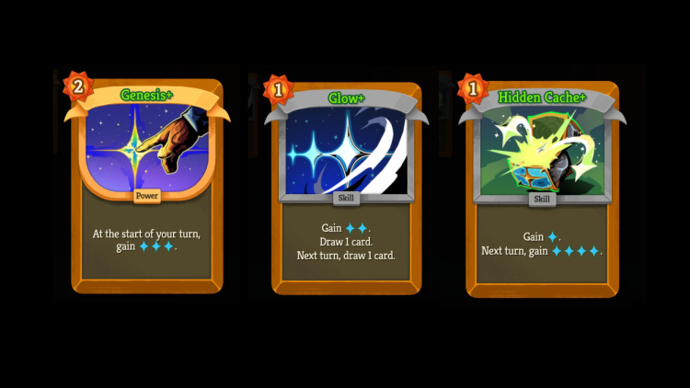
The Star Build generates Stars through Genesis, Glow, and Hidden Cache, then converts the accumulated total into massive multi-hit damage through Stardust and Radiate — the engine scales with deck size and runs best at 15–18 cards.
| Card | Type | Effect | Upgraded |
| Genesis | Power | At the start of your turn, gain 2 Stars | Gain 3 Stars per turn |
| Glow | Skill | Gain 1 Star; draw 1 card; next turn, draw 1 card | Gain 2 Stars; draw 2 cards |
| Hidden Cache | Skill | Gain 1 Star; next turn gain 3 Stars | Gain 1 Star; next turn gain 5 Stars |
| Stardust | Skill | Deal 5 damage to a random enemy X times based on Stars spent | Deal 7 damage X times |
| Black Hole | Power | Whenever you spend or gain a Star, deal 3 damage to all enemies | Deals increased damage per Star |
| Radiate | Skill | Deal 3 damage to all enemies for each Star gained this turn | Deals increased damage per Star gained |
Genesis resolves the Star generation problem for the entire run once it hits the board — 2 free Stars per turn before any card is played stacks quickly against multi-turn elite fights. Stardust converts the accumulated total into single-target burst, spending every Star at once for hits that scale directly with how many turns Genesis and Hidden Cache had to operate. Black Hole adds passive AoE damage to every Star transaction, turning both generation and spending into board-wide pressure without a dedicated attack card in hand. Radiate functions as the AoE finisher: pairing it with a Royal Gamble or Hidden Cache activation on the same turn generates enough Stars in a single hand to wipe groups of enemies before they act. Keeping the deck at 15–18 cards ensures Genesis, Hidden Cache, and Stardust cycle back within two turns of each other, which is the minimum draw frequency the engine needs to threaten bosses consistently.
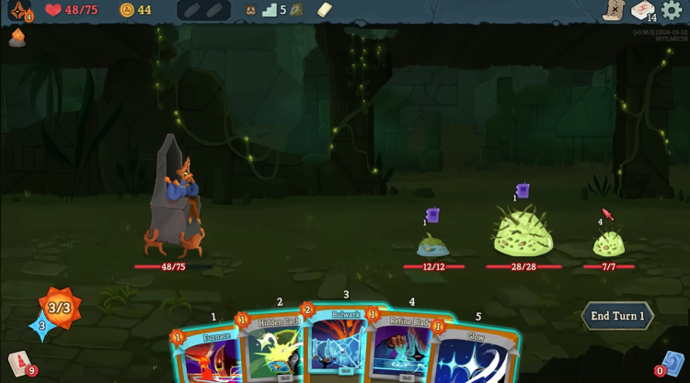
Read the complete relics guide for Regent's highest-priority items. Galactic Dust converts every 10 Stars spent into 10 Block, covering the defense gap on turns Stardust resolves. Lunar Pastry generates one free Star at the end of every turn, compounding across long fights without spending a card slot. Chemical X increases the hit count of X-cost spells by 2, directly raising Stardust and Radiate's output on the turns that decide boss fights.
Strong Regent Build (Tier-A): Infinite Alignment
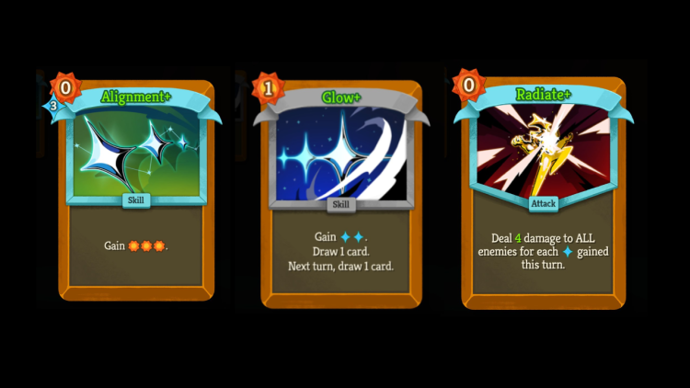
Alignment converts Stars into Energy at a one-to-one rate — paired with upgraded Glow in a deck stripped to ten cards or fewer, the loop cycles indefinitely, generating infinite Stars and closing fights through Radiate's per-Star damage.
| Card | Type | Effect | Upgraded |
| Alignment | Skill | Spend all Stars; gain 1 Energy per Star spent | No longer Exhausts; can be played repeatedly |
| Glow | Skill | Gain 1 Star; draw 2 cards | Gain 2 Stars; draw 2 cards |
| Radiate | Skill | Deal 3 damage to all enemies for each Star gained this turn | Deals increased damage per Star gained |
| Hidden Cache | Skill | Gain 1 Star; next turn gain 3 Stars | Gain 1 Star; next turn gain 5 Stars |
| Tyranny | Skill | Exhaust a card in your hand | Exhausts two cards |
I think the Infinite Alignment loop is Regent's highest ceiling but the hardest archetype to assemble — both Alignment and Glow must be upgraded, and the deck must be reduced to ten cards or fewer before the loop stabilizes. The sequence runs: play Alignment to convert Stars into Energy, use that Energy to play Glow, Glow draws into Alignment again, the cycle repeats and generates Stars on each iteration. Radiate converts each new Star gained mid-loop into 3 AoE damage per hit, which compounds across dozens of cycles into numbers that end fights before the enemy acts.
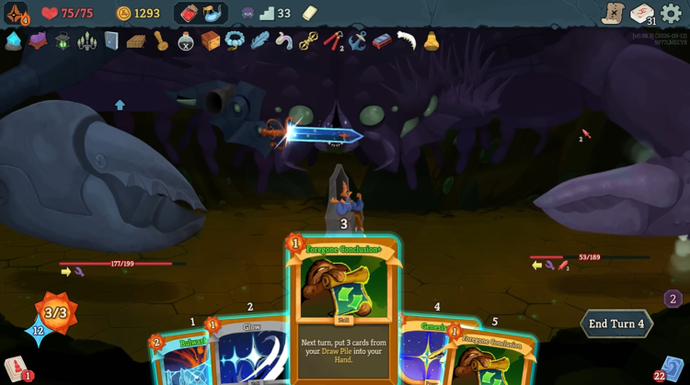
Tyranny accelerates deck thinning mid-run by Exhausting bad cards directly from hand, reducing the draw pool faster than Merchant visits alone allow. Without both upgraded cards and a lean deck, Alignment resolves once, generates modest Energy, and sits in the discard pile as a normal skill — the loop never activates and the build plays as a weaker Star variant.
Average Regent Build (Tier-B): Sovereign Blade
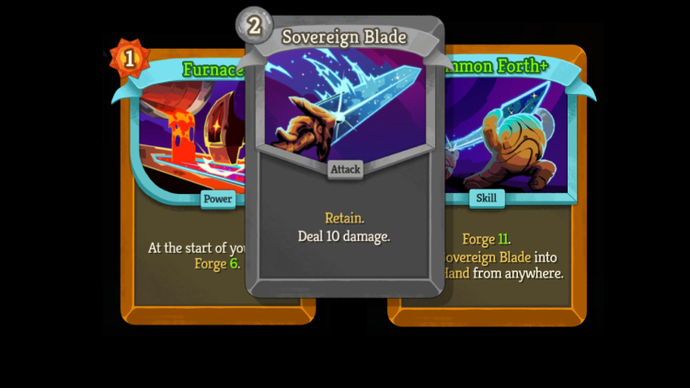
Sovereign Blade scales through Forge — each card that applies Forge permanently increases the Blade's damage for that combat, turning a 10-damage baseline into a fight-ending single hit once enough Forge effects stack.
| Card | Type | Effect | Upgraded |
| Sovereign Blade | Attack | Deals 10 base damage plus all Forge accumulated; Retain | Increased base damage |
| Furnace | Power | At the start of your turn, applies passive Forge | Applies more Forge per turn |
| Summon Forth | Skill | Return the Sovereign Blade to your hand | Costs 0 energy |
| Conqueror | Power | Doubles the current Forge on Sovereign Blade | Costs 1 less energy |
| Seeking Edge | Power | Sovereign Blade now hits all enemies | Costs 1 less energy |
| Cosmic Indifference | Skill | Gain 9 Block; move a card from Discard Pile to Draw Pile | Increased Block |
Conqueror doubles accumulated Forge in a single play — a Blade Forged to 30 damage becomes 60 in one turn, turning slow Forge accumulation into a viable single-turn kill condition against elite HP totals. Summon Forth retrieves the Blade from the discard pile without spending Energy, solving the build's primary weakness of drawing it once per cycle and waiting for it to recirculate. Seeking Edge converts the Blade into AoE, addressing multi-enemy rooms that otherwise stall a single-target Forge strategy for entire turns.
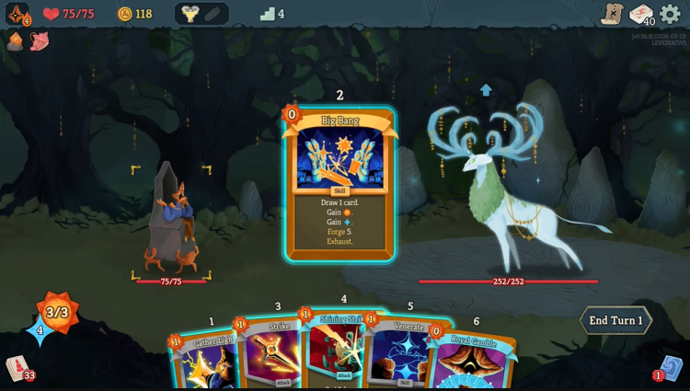
The build struggles against enemies that reduce all damage to 1, a direct counter to the high-Forge single-hit model that no support card fully offsets. Skipping unnecessary card rewards keeps the Blade in hand more frequently; every non-essential card added delays the draw cycle and reduces Forge accumulation per combat.
Weak Regent Build (Tier-C): Card Creation Build
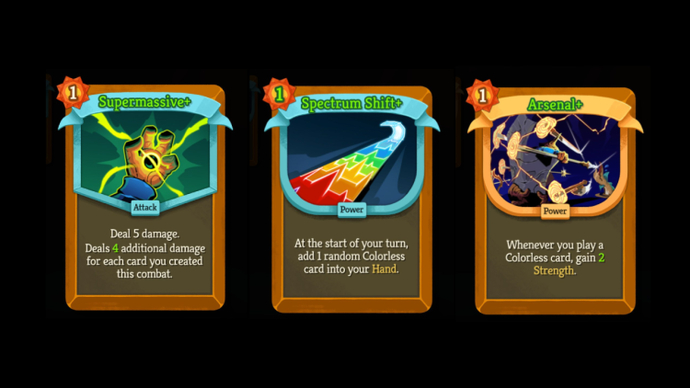
Supermassive scales its damage with every card created during a run — Spectrum Shift, Arsenal, and Pillar of Creation feed the counter, but the build requires a specific rare card early and depends on RNG card generation to close fights.
| Card | Type | Effect | Upgraded |
| Supermassive | Attack | Deals damage scaling with total cards created this run | Increased base damage scaling |
| Spectrum Shift | Power | Generates a random card each turn | Costs 1 less energy |
| Arsenal | Power | Gain Strength each time a card is created | Gain more Strength per creation |
| Pillar of Creation | Power | Gain Block each time a card is created | Gain more Block per creation |
Supermassive can reach damage numbers above 100 with enough card creations, but getting there requires Spectrum Shift resolving across multiple combats before Act 3 — a timeline that leaves early-game fights underpowered and reliant on whatever direct damage cards the run happens to provide.
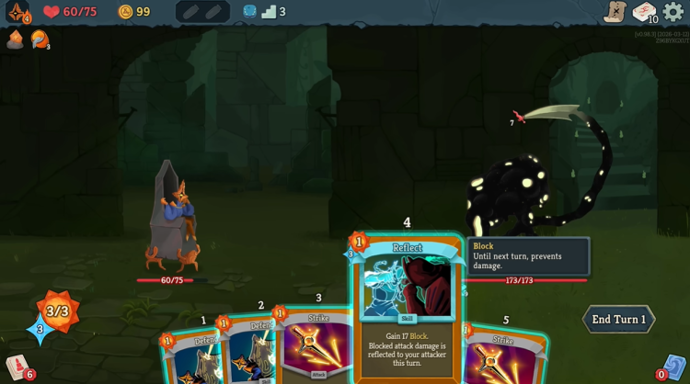
Arsenal and Pillar of Creation convert each creation event into Strength and Block, respectively, providing secondary scaling that keeps the build functional during the turns Supermassive is not in hand. The build's central problem is the dependency on Supermassive appearing as a card reward early enough to accumulate a meaningful creation count before bosses require high damage output. Without Supermassive and Spectrum Shift generate random cards with no payoff condition, producing a deck full of inconsistent effects and no reliable win condition.
Worst Regent Build (Tier-D): Debris Build
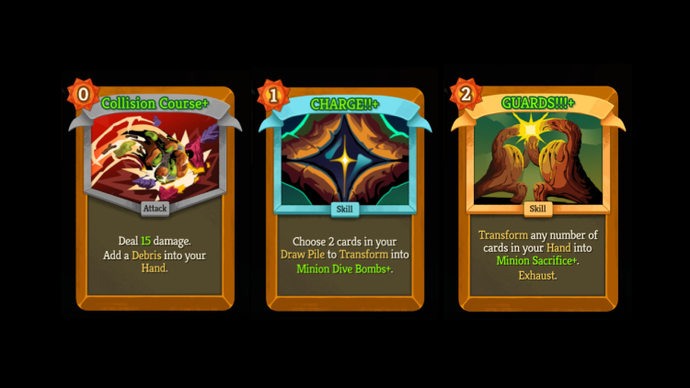
Debris cards are self-generated Status cards that can be Exhausted — the archetype's only dedicated synergy cards are niche, and most Regent builds treat Debris as a side effect to manage rather than an engine to build around.
| Card | Type | Effect | Upgraded |
| Collision Course | Skill | Deals damage; adds Debris to Discard Pile | Increased damage |
| Charge | Skill | Transforms cards into 0-cost Minion Strike attacks; generates Debris | Transforms more cards |
| Guards | Skill | Transforms cards into 0-cost Minion Block cards; generates Debris | Transforms more cards |
Debris cards enter the Discard Pile as Status cards and require a card play to Exhaust them — every Debris drawn without an Exhaust outlet occupies hand space that a Star generator or payoff spell would use more efficiently. Charge and Guards produce Minion cards through Transformation, which generates Debris as a byproduct; in any other archetype, that Debris is irrelevant, but a dedicated Debris build requires specific payoff cards that currently have no high-synergy rare equivalent in the early access card pool. The mechanic's interaction count is small enough that building around it leaves the deck without consistent damage output by Act 2. A single Debris card picked up in a Star or Forge run produces negligible downside; a deck built to maximize Debris Exhausts produces negligible damage and no win condition against Act 3 boss HP totals.
Slay The Spire 2 Builds for Beginners
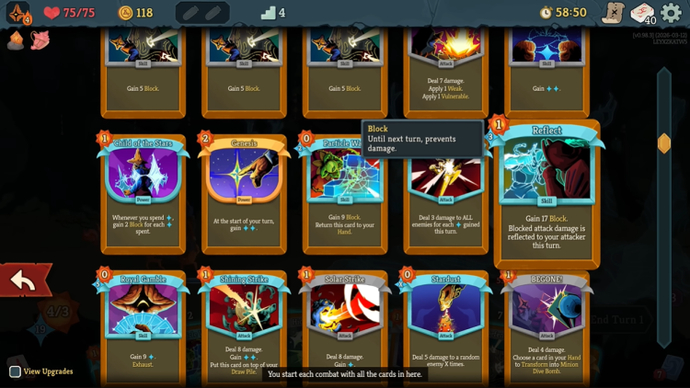
Regent starts at 75 HP with Crown of Stars, granting 3 Stars at the start of every combat, providing immediate access to the secondary resource before the first card resolves. Check our STS2 beginners guide for full first-run tactics, pathing advice, and campfire strategy that apply across all characters. Star cards cost little or no Energy but require other Star cards to activate — drafting too many generators without payoff spells produces hands full of resource accumulation and no damage output, while drafting too many spenders without generators leaves payoff cards unplayable. Elites should be fought two to three times per act since each drops a relic, and Regent's build-defining items — Galactic Dust, Lunar Pastry, Chemical X — only appear through those fights.
Every campfire defaults to upgrading over resting unless HP sits critically low, since upgraded Genesis or Stardust alters boss outcomes more than restored HP. Discover the complete Slay The Spire 2 timeline (Epochs) to understand that Regent unlocks after one Silent run with no win required, and that the Orobas Ancient in Act 2 replaces Crown of Stars with Divine Destiny, raising starting Stars from 3 to 6 — a modifier that becomes available once the Orobas Epoch is completed. Removing Strike and Defend cards at every Merchant visit tightens the draw pool and raises the frequency of hitting Genesis, Stardust, or Alignment in opening hands.

Vitalii Diakiv writes gaming blogs and guides, focusing on the latest announcements and games matched with pop-cultural phenomena. Second, he covers esports events Counter-Strike 2, Marvel Rivals, League of Legends, and others.



 Crimson Desert Travel TipMaster fast travel in Crimson Desert by unlocking Abyss Nexuses and Cressets for quicker movement across Pywel.
 stawraith
 How to Get the Darkbringer Sword in Crimson DesertGet the Darkbringer sword in Crimson Desert and unlock Ator's Orb for maximum damage!stawraith
 How to Get the Plate of the Shadows Set in Crimson DesertPlate of the Shadows in Crimson Desert – stylish, powerful, fully customizable. Find all pieces, unique weapon, and alternative hood.stawraith
 How To Participate in the LEC Rivals Challenge: A Full Guide to Rewards and RulesMaster the LEC Rivals Challenge with our comprehensive guide. Learn how to earn points, track your ranking, and claim exclusive prizes during the LEC Spring Split 2026.
 Chillplay