

Slay The Spire 2 Beginners Guide: How To Build Your Deck On The First Run
 3028
3028
Slay the Spire 2 is a roguelike deckbuilder where every run starts from zero and nothing carries over except knowledge. Five playable characters, procedurally generated maps, and a reworked enemy roster make the sequel meaningfully harder than the original. Deck consistency, relic accumulation, and smart pathing determine whether a run ends at Act 1 or reaches the final boss. This Slay the Spire 2 Guide covers everything a new player needs to understand before and during their first serious run.
Choose Your Character
Slay the Spire 2 launches with five characters, each built around a distinct mechanical identity. The game makes all Slay The Spire 2 characters available progressively, with The Ironclad accessible from the start and the rest unlocking through Epoch progression.
- The Ironclad
- The Silent
- The Regent
- The Necrobinder
- The Defect
The Ironclad starts with 80 HP and the Burning Blood relic, which heals 6 HP at the end of every combat encounter. His cards scale around Strength stacking and self-sustain, making him the most forgiving pick for new players. The Silent starts at 70 HP, draws two extra cards at the start of each combat via Ring of the Snake, and builds around Poison, Shivs, and discard synergies. Her damage output in early fights is lower than that of other characters, and her builds require committing to a specific archetype early to function against elites and bosses. The Regent operates on two separate resources, starts at 75 HP, and rewards players willing to experiment with unconventional build structures. The Necrobinder starts with only 66 HP but summons a minion each turn through Bound Phylactery, which absorbs incoming damage. The Defect begins at 75 HP, channels one Lightning orb per combat through Cracked Core, and centers entirely on orb generation and energy manipulation — a slow starter that rewards careful card curation over the course of a run.
Understanding Slay the Spire 2 Run Types
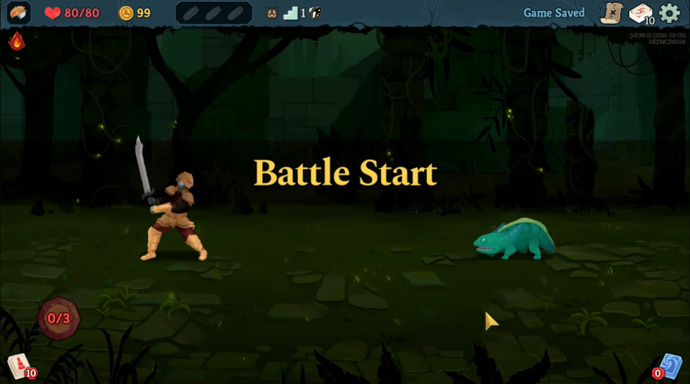
Three run modes are available in Slay the Spire 2, each serving a different purpose. Standard runs from the core experience. Daily runs require beating the game once in standard mode across all characters. Custom runs unlock after three standard victories.
Standard Run
Slay the Spire 2: Standard Runs are the game's baseline roguelike mode. The map is procedurally generated each time, built across three acts and ending with a climactic boss encounter. Card rewards, relic drops, and event outcomes shift on every attempt, and no two runs share the same structure.
Daily Run
Slay the Spire 2: Daily Runs present every participant with an identical Spire layout on a given day. Scores post to a public leaderboard, making this mode primarily competitive. Daily runs are locked until the player completes at least one standard run with each available character.
Custom Run
Slay the Spire 2: Custom Runs allow players to define the conditions of their attempt before it begins. Custom seeds produce exact Spire layouts according to player specifications. Mutators can be added to alter core game mechanics, making this mode useful for testing specific builds or practicing against known enemy patterns.
How Should You Build Your Deck in Slay the Spire 2?

The most consistent mistake new players make is forcing a predetermined strategy rather than building around what the run actually provides. Slay the Spire 2 does not guarantee specific cards, so arriving with a fixed archetype in mind leads to drafting combo pieces without the support cards needed to activate them. Every card offer deserves evaluation on its own merits. A card that functions independently, without requiring another specific card in play, is always safer to draft early than one that depends on a setup that may never arrive.
Before chasing a win condition, the deck needs a functional baseline: reliable damage, consistent block, and at least one answer to high-attack enemies. I think specialization only becomes worthwhile once that foundation is in place, because bosses like the Waterfall Giant punish slow or one-dimensional strategies directly. Certain elites in the Underdocks cap the damage they receive per round, making burst-only decks struggle through what should be manageable encounters. Draft cards that work on turn one, then layer synergies on top as the run develops. Removing weak cards matters as much as adding strong ones. Every card added to the deck dilutes the draw pool, so skipping card rewards that do not clearly improve the current strategy is not a loss — it is a deliberate decision.
Slay The Spire 2 Relics

Relics are passive bonuses that apply across every fight for the duration of a run. Understanding all Slay The Spire 2 relics and their interactions with specific builds separates players who reach Ascension from those who stall out in Act 2. Defeating elites is the primary source of relic acquisition. Orichalcum smooths out turns where no block is generated. Vajra amplifies multi-hit attack decks significantly. Mummified Hand functions as a build-defining piece for certain strategies. Common relics compound across the full run in ways a single card rarely does, which makes purchasing relics at the Merchant worth prioritizing over individual card buys when gold allows.
Slay The Spire 2 Bosses vs Elites

Elites appear on the map as marked mini-boss encounters, drop a relic, a card reward, gold, and a possible potion upon defeat, and present a meaningful risk-reward calculation on every run. Bosses appear at the end of each act, are unavoidable, and always precede a campfire where the player can rest or upgrade a card before the fight. Defeating elites two to three times in Act 1 is a strong default plan, since the relic gains accelerate run power faster than avoiding damage preserves it. Skipping elites to conserve HP produces weaker decks at the boss, lower relic counts, and less gold for the shop. Bosses drop powerful rewards and scale the run's progression in ways that elite fights alone cannot replicate.
Slay The Spire 2 Battles

In combat, stacking a block before attacking is the correct default when an enemy intends to deal damage that turn. Playing aggressively into an incoming attack without enough block accelerates HP loss and shortens the number of decisions available for the rest of the act. Each turn reads differently depending on the enemy's declared intent, the cards in hand, and how many rest sites remain on the path. When an enemy spends its turn applying buffs or building shields rather than attacking, that is the turn to push maximum damage output.
The baseline deck of five Strikes and five Defends starts every run, but both card types fall behind almost immediately. The Ironclad's Pommel Strike costs one energy, deals nine damage, and draws one card — three more damage than Strike at the same cost. The Silent's Cloak and Dagger costs one energy, applies six block, and places a free four-damage Shiv into hand. Every time a better replacement exists in the deck, a basic Strike or Defend becomes a wasted draw. Paying the Merchant to remove cards, using events that offer card removal, and skipping rewards that do not improve the deck all serve the same goal: drawing the best cards in the deck as frequently as possible.
How HP (Health Points) Work in Slay the Spire 2?

HP functions as a resource, not a score. The run ends at zero, and every point above that number is available to spend for advantages elsewhere on the map. I see players treat damage taken as failure when it is actually a trade — one that sometimes favors accepting a hit rather than spending a campfire on healing. Rest sites used to Smith rather than rest often produce more run value than the HP restored, particularly when the deck contains cards that upgrade into meaningfully stronger versions. Events that cost HP in exchange for better rewards become viable options for players comfortable evaluating the math behind each trade.
How Map Works in Slay the Spire 2?

The map is accessible at any point during a run through the icon at the top-right of the screen, including during NPC dialogue. Each icon identifies the encounter type ahead: standard enemy rooms, elite encounters, treasure chests, rest sites, the Merchant, and unknown rooms that can contain any of the above. Unknown rooms occasionally trigger random events, which generally offer a buff alongside a cost, such as card removal in exchange for a temporary curse. Hovering over any icon type on the map legend highlights every instance of that encounter on the current floor, allowing route planning before committing to a direction. If Neow's starting bonus provides significant gold, pathing toward an early Merchant becomes a concrete priority.
Campfires

Campfires offer two options: rest for 30 percent of maximum HP, or Smith to upgrade one card. Upgrading is the stronger default choice in most situations. Upgraded cards deal higher damage, cost less energy, or generate additional effects that shift the outcome of boss fights. Apotheosis, when available as a card reward, upgrades every card in hand simultaneously and warrants high-priority consideration. The goal across a run is to Smith at least twice through deliberate pathing toward campfire locations.
Unlocks and Epochs

The Epoch system handles all metaprogression in Slay the Spire 2. Clearing specific acts, defeating bosses, and completing character objectives unlocks new relics, cards, potions, Ancients, and locations. All characters beyond The Ironclad sit behind Epoch gates. Daily runs unlock after beating the game once in standard mode with all available characters. Custom runs require three standard victories. Progressing through Epochs expands the options available in future runs, which makes each attempt more varied even before the player builds stronger mechanical knowledge.
Here's Your First Run Tactic If You're a Newcomer
Open the map before selecting Neow's bonus and identify the density of elite encounters, rest sites, and Merchant locations across the first act. If Neow offers a large gold bonus, confirm a Merchant appears early on the chosen path before accepting. If Neow reduces max HP, deprioritize routes stacked with elites.
Select The Ironclad for the first run. His 80 HP and end-of-combat healing absorb early mechanical mistakes that would end a run faster on lower-HP characters. In the first three fights, prioritize blocking when enemies show attack intent. Use all three energy per turn rather than holding cards back.
After the first combat reward, take a card only if it functions independently without other setup. Skip rewards that do not address a current weakness. At the first Merchant visit, pay to remove one Strike. Repeat this at every subsequent Merchant visit until the baseline cards are gone.
Path toward two to three elite encounters in Act 1 while monitoring current HP against the next rest site. Fight elites when HP allows, absorbing the damage without reaching critical levels before a campfire. Use potions during elite fights, not boss fights. A potion spent shortening an elite encounter reduces total damage taken when entering the next room.
At every campfire, Smith will not use HP to sit at 30 percent of maximum. Upgrade attack cards that deal damage or skill cards that generate block. Avoid adding more than one or two cards per act that do not serve the current deck's primary function. At the Act 1 boss, the deck should contain fewer than 20 cards, have at least two relics from elite defeats, and carry at least one potion. Enter the fight with upgraded cards and a clear sense of which cards to prioritize drawing.

Vitalii Diakiv writes gaming blogs and guides, focusing on the latest announcements and games matched with pop-cultural phenomena. Second, he covers esports events Counter-Strike 2, Marvel Rivals, League of Legends, and others.



 Dead Hand Collection in CS2: Full Overview of the New SkinsCounter-Strike 2 receives the Dead Hand Collection. Check out all new skins, gloves, and the Dead Hand Terminal feature in our full breakdown of the latest CS2 update.
 fauesde
 Dota 2 PGL Wallachia Season 7 Playoffs PreviewDiscover everything about PGL Wallachia Season 7 Playoffs: teams, format, schedule, and expert predictions for the $1M event.
 Dima Ostapchuk
 League of Legends First Stand 2026: Date, Format, and TeamsEverything about League of Legends First Stand 2026: schedule, tournament format, participating teams, groups, and live streams on Twitch and YouTube. Follow the first global LoL event of 2026.fauesde
 ESL Pro League Season 23 Finals PreviewThe ESL Pro League Season 23 Finals are set in Stockholm. Check out Stage 1 and Stage 2 results, playoff teams, tournament format, and the main contenders for the title.fauesde
 #26
#26 L1ga Team#42
 Team Spirit AcademyWatch match