

No Rest For The Wicked - Essential Crafting System Tips
 2011
2011
The ARPG genre, dominated by giants like Diablo or Path of Exile 2, typically focuses on endless loot dropping from enemies. However, the No Rest For The Wicked Crafting System offers a different approach. In this game, creating items plays a pivotal role, not just a supporting one.
While you can rely on randomly found swords and armor in the early game, deep crafting is vital for successfully clearing end-game content (The Crucible). No Rest For The Wicked Crafting allows you to minimize RNG, adapt gear to your specific playstyle, and obtain stats that are impossible to find on standard loot. Without a developed production system, your progression will sooner or later hit a wall.
How Does No Rest For The Wicked Crafting System Works
The crafting system here isn't just about pressing a "Make" button. It is a three-step process: Gathering, then Learning, and only then Creating. You can't just walk up to a blacksmith and order the "best sword" if your character doesn't know how to forge it and lacks the materials.
Here is how this chain works step-by-step:
1. Tools and Gathering
The foundation of the ecosystem is raw materials. You can't buy the best resources; you have to gather them, risking your life. To do this, you need a basic set of tools:
- Pickaxe: For mining ore (Copper, Iron) and stone.
- Woodcutter's Axe: For chopping trees (Pine, Spruce).
- Shovel: For digging up roots, clay, and unearthing hidden treasures.
- Fishing Rod: For catching fish (food).
Important Nuances: Tools have weight (affecting your dodge roll), they break (requiring repair kits), and they have their own tiers (a Copper Pickaxe won't mine an Iron vein).
2. Blueprints & Recipes System - The Most Important Part
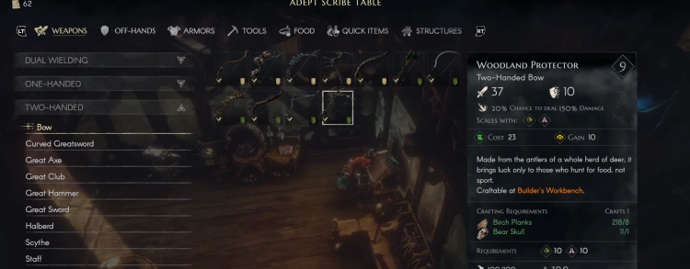
Even with an inventory full of ore, you can't create anything without Knowledge. At the start of the game, your crafting list is nearly empty.
- Finding: You find scrolls - Blueprints and Recipes - in chests, loot them from bosses, or buy them from merchants.
- Learning: Just having the scroll in your inventory does nothing. You must go into your inventory, select the scroll, and press "Use".
- Result: The paper disappears (is consumed), and the recipe is permanently added to your knowledge book. Only then will the corresponding sword or armor appear in the Blacksmith's menu or at your Workbench.
Without constantly finding and "consuming" new recipes, you will be running around in starter gear until the end of the game.
3. RNG & Upgrades
Finally, when the recipe is learned and resources are gathered, the moment of crafting arrives. In No Rest for the Wicked, creating an item is always a bit of a lottery where the result is never fixed.
- Floating Stats: RNG affects more than just weapon damage. Armor values, Poise, durability, and even weight can vary within a certain range. The same sword can be crafted with "minimum rolls" or maximum damage.
- Random Bonuses: Sometimes an item is created with lucky innate traits or extra gem slots, instantly making it more valuable.
- Leveling Up: It is important to remember that the initial numbers aren't a final verdict. You can increase the level of a crafted item and its base stats at the Blacksmith. Even a sword with average stats can be "boosted" into a deadly weapon by investing resources and money, though it doesn't always make sense to do so.
The entire gameplay loop comes down to a clear cycle. First, you find a blueprint, then gather ore, craft several copies of the item, choose the one with the best stats, and start leveling it up. If you skip this selection and upgrade stage, your character will quickly become too weak for new locations.
How To Unlock Crafting in No Rest For The Wicked
Access to full crafting and resource refining isn't immediate—it’s a reward for progress that you have to earn. Since the early game can be quite brutal, we’ve prepared a separate guide for newcomers: No Rest for the Wicked: Complete Beginner’s Guide And Essential Tips. There, we break down all the early-game nuances and provide essential survival advice.
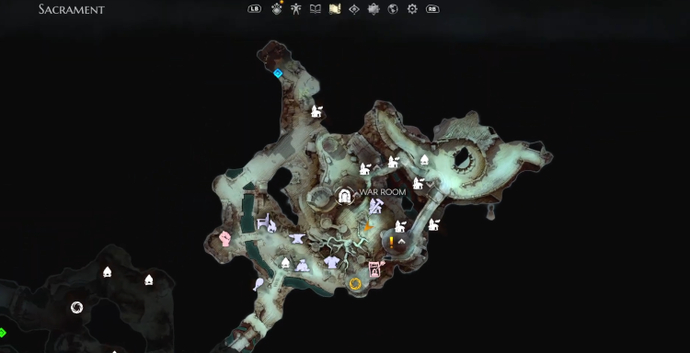
As for crafting itself, you can't simply walk up to a station and start working. First, you must prove your worth to the city. The unlocking process looks like this:
- Reach Sacrament: This is the main hub city and regional capital. You will only arrive there after defeating the first story boss, Warrick the Torn. The city greets you in ruins, and it is up to you to restore it.
- Talk to The Watcher: This is a mandatory step in the "Sacrament" quest. After the dialogue in the tower (Rookery), you will be officially authorized to engage in construction.
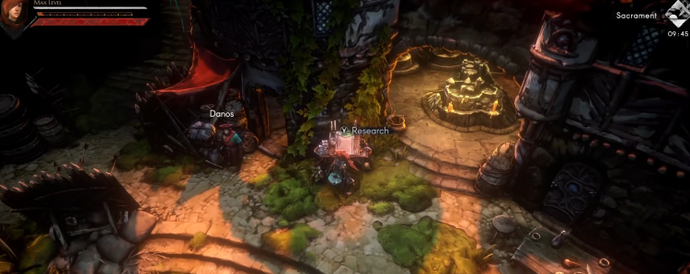
- Unlock Danos: This NPC is the city's chief foreman and architect. You can initially find him north of the main square (Whisper), near a cage holding a prisoner. Speaking to him grants you access to the Research Table.
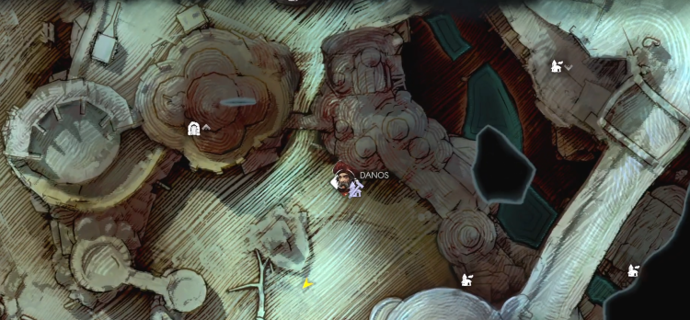
Danos's menu is where the magic of city management happens. You invest resources (Wood, Ore, Clay) and money into various city projects. Here, you face a choice between two development paths:
Path 1: Upgrading Vendors (Public Good) You can upgrade NPC buildings.
- Fillmore (Blacksmith): Upgrading him allows him to work with higher-tier ore and sell better gear.
- Eleanor (Enchanter): Unlocks access to more powerful runes and gems.
- Gordon (Chef): Expands the tavern menu for purchasing ready-made food.
- The Catch: This is convenient, but requires constant running around the city and spending money on the artisans' services.
Path 2: Personal Production (Self-Interest) This is the more profitable path, though expensive at the start. You learn station recipes (Building Projects) from Danos to install them yourself. However, public zones won't work for this. You absolutely need to buy your own house.
- The first available housing (The Roost) costs about 20–30 Silver. Buying real estate in Sacrament isn't cosmetic; it is a strict necessity.
- The main reason to buy a house: It’s not just a place for Workbenches, Furnaces, and Anvils. It is a place for Storage Chests. Inventory space is severely limited, while resources are plentiful. Without a house and chests, you will simply drown in loot and won't be able to craft effectively.
Important Note: All of Danos's construction projects take real time (from 15 minutes to several hours). Started building a forge? Feel free to go complete side quests or explore the map - the building won't appear instantly.
What To Craft First
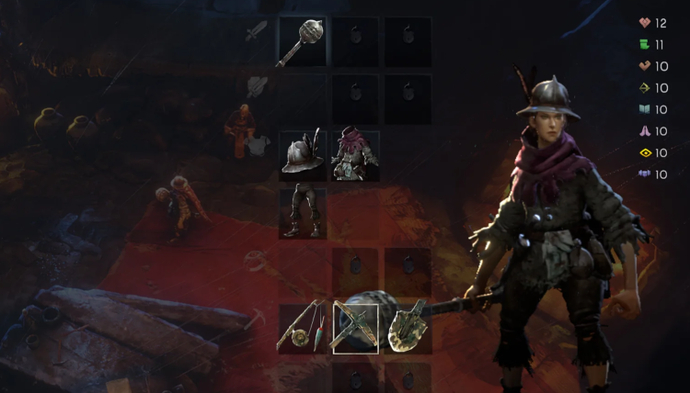
Once you’ve unlocked housing and Danos’s blueprints, prioritizing is key. Early-game resources (especially Clay and Copper) are scarce, so you need to spend them wisely.
Your first step is to establish a refining chain. Raw materials are useless on their own: you can’t forge a sword from a chunk of ore or build a house with a raw log.
1. Refiners
These are the foundation of your economy. Town merchants won’t refine resources for you, making this your #1 priority.
- Sawmill Table: The absolute priority. It converts logs (Pine, Spruce) into Planks. Without Planks, you can't build chests or any other crafting stations.
- Furnace: Essential for smelting Copper and Iron ore into Ingots.
- Spinning Wheel & Tanning Rack: Necessary for processing leather and cloth.
2. The Workbench
Once you have your first Planks and Ingots, build a Workbench immediately. This is your primary crafting station for survival.
- Unlike the Anvil (which is for weapons), the Workbench is where you create Tools (Pickaxes, Axes, Shovels).
- Since tools break constantly, having your own Workbench is critical for crafting cheap replacements instead of buying them at inflated prices.
- It’s also where you craft Light Armor and Bows.
3. Storage & Bed
- Storage Chests: Built from the very Planks you made at the Sawmill. Character inventory is small, so chests are mandatory for dumping your loot.
- Bed: Allows you to heal for free.
4. Anvil & Hearth
Save the Anvil (for heavy weapons) and the Hearth (for cooking) for last.
This specific sequence - using the Sawmill to create Planks, then using those Planks to build the Workbench, and finally crafting Tools and Chests - makes you fully autonomous. You won't rely on town prices and will always have spare tools ready for farming.
Why Crafting Is The Key To Victory
To sum it up, we can confidently say that crafting in No Rest for the Wicked isn’t just an optional mechanic - it is the true foundation of your survival and, essentially, a core part of the gameplay loop. Unlike many ARPGs where you can often breeze through the story by simply equipping whatever random loot drops from monsters, relying on that approach here will quickly lead you to a dead end.
Crafting items gives you complete control over your character's progression. Instead of endlessly hoping for luck when opening chests, you get to decide exactly which piece of armor to upgrade or which weapon to craft to patch up the weak spots in your build. Investing in your own workshop and developing the city pays off a hundredfold. It makes you fully autonomous, saving you from the merchants' predatory prices and allowing you to prepare consumables for long expeditions.
Ultimately, this is the only reliable way to prepare for the brutal endgame content, such as the Cerim Crucible. There, you will need top-quality (Tier 3) gear with perfectly rolled stats, and the only way to get it is to take the hammer into your own hands and stop relying on chance.

Kirill is a writer of articles and blogs at eGamersWorld, having joined the team in 2024. His primary focus is analytics and crafting content about esports. With years of experience in gaming, Kirill brings deep industry insights to deliver high-quality and engaging materials.

 ESL One Birmingham 2026 Grand Final Results: Tundra Are ChampionsTundra Esports defeat Team Y 3:1 in the Grand Final of ESL One Birmingham 2026. A confident performance, full match breakdown, and final standings inside.
 stawraith
 ESL One Birmingham 2026: Lower Bracket Final Recap — Don’t Miss the Grand FinalTeam Y wins 2:1 over Xtreme Gaming in ESL One Birmingham 2026 Lower Bracket Final and advances to face Tundra Esports in the Grand Final.stawraith
 ESL One Birmingham 2026 Playoffs Day 3 Results and Final Day ScheduleESL One Birmingham 2026 Playoffs Day 3 has set the stage for the финал — Tundra Esports advance to the Grand Final, while Team Y and Xtreme Gaming battle in the Lower Bracket.stawraith
 S.T.A.L.K.E.R. 2: Cost of Hope — Everything We KnowThe Zone expands in Cost of Hope! Discover the new Iron Forest region, the "second trilogy" story arc, and Ultimate Edition bonuses in this massive S.T.A.L.K.E.R. 2 expansion arriving Summer 2026.
 fauesde